

Home / Industries / Industrial process
Process cooling for oil, hydraulics, quench and plant water.
Presses slow down when hydraulic oil runs hot. Quench tanks drift and parts fail. Compressors and generators trip. Most process heat can go straight to the air through a closed loop, without a cooling tower or the water bill behind it.
Industrial process cooling removes heat from oil, water or glycol loops serving machines and processes. Air-cooled oil coolers and dry coolers reject that heat to outdoor air in a closed loop, which keeps the fluid clean and uses no water.
What makes it hard.
The problems we size against.
Hot oil slows the machine.
Hydraulic oil above its target temperature thins out, leaks past seals and slows the cycle.
Open towers foul the loop.
Open cooling water picks up dirt and scale. A closed loop keeps the process fluid clean.
Summer peaks trip equipment.
Coolers sized to an average day fail on the peak day. Size to the real design ambient.
How the system works.
From the load to the air, in four steps.
- The machine heats the fluid.
Presses, compressors, furnaces and generators pass heat into oil, water or glycol.
- A pump carries it out.
The closed loop moves the hot fluid to the cooler.
- Fans reject it to air.
Oil coolers or dry coolers transfer the heat to outdoor air.
- Cool fluid returns.
The fluid comes back at setpoint, clean and ready.
The equipment.
What goes into a industrial process system.
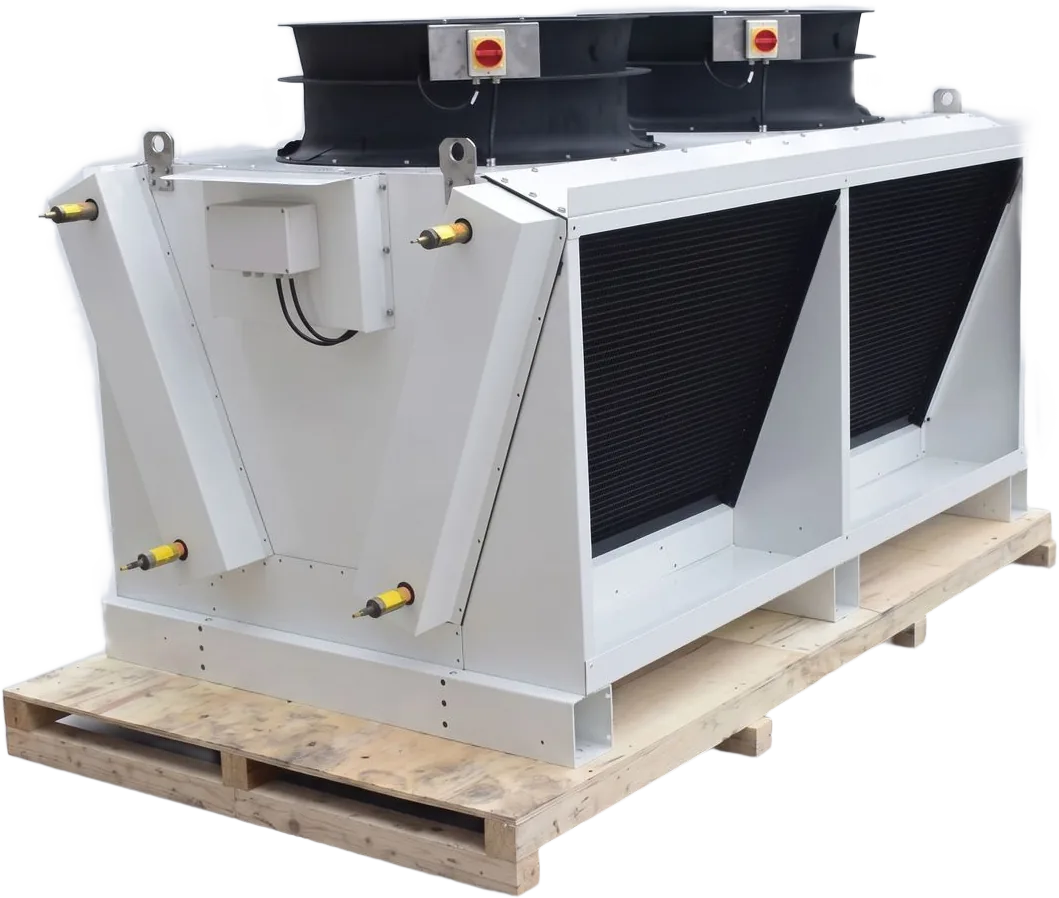 Air-Cooled Heat Exchangers
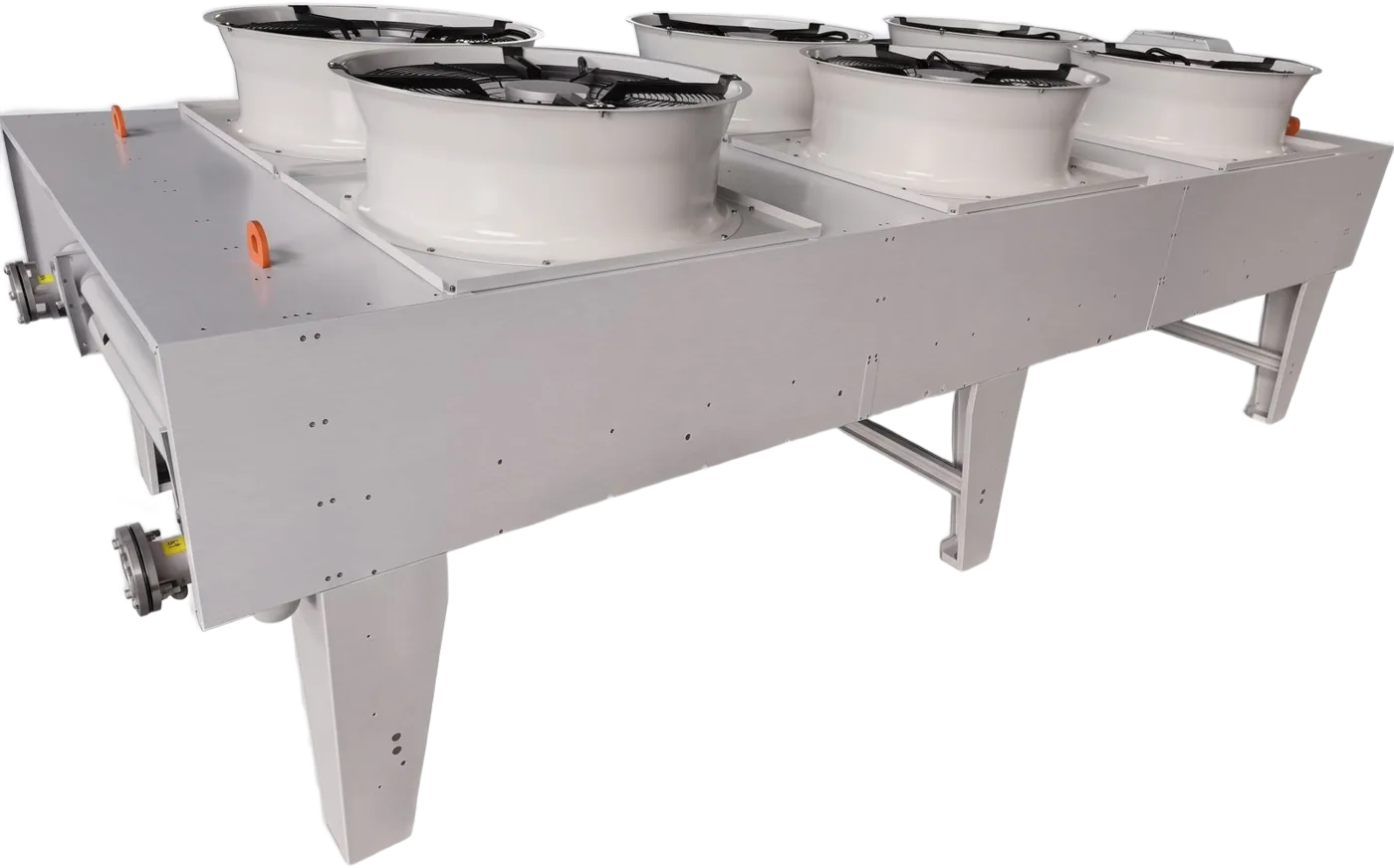 Dry Coolers
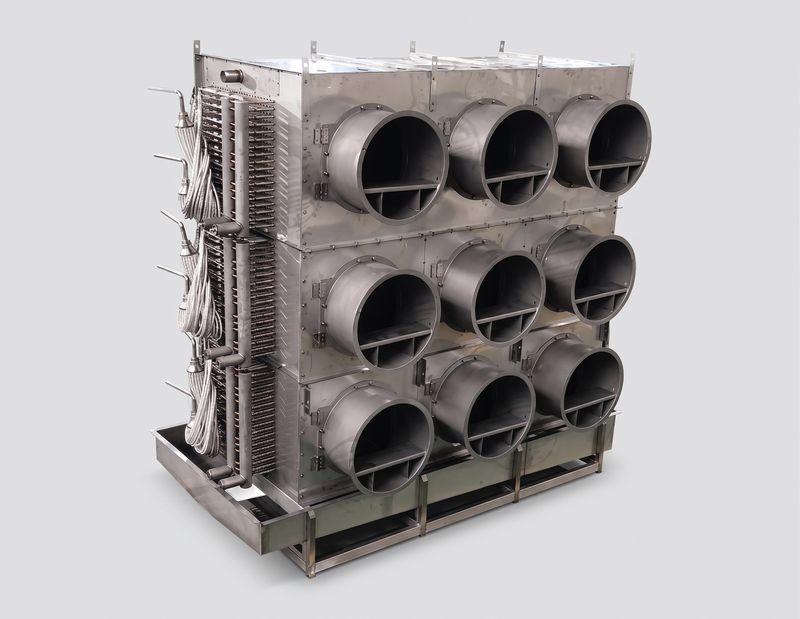 Customized Heat Exchangers
Questions about industrial process
What is an air-cooled oil cooler?
It is a finned coil and fan unit that cools hydraulic, lubricating or process oil with outdoor air. No water touches the oil, and the loop stays closed.
When should I use a dry cooler instead of a cooling tower for process water?
Use a dry cooler when the process can accept water about 10 to 15°F above the outdoor dry-bulb temperature, when water is costly or restricted, or when the loop has to stay clean. Use a tower when you need water close to the wet-bulb temperature.
How is an oil cooler sized?
From the heat load, the oil type and viscosity grade, the flow rate, the oil inlet and outlet temperatures and the design ambient.
Send the heat load.
Loop temperatures, flow and site. A sized selection comes back.