

Home / Industries / Data centers
Data center heat rejection, sized for liquid cooling.
Racks are moving to liquid. The heat now leaves the building in water, and that water needs somewhere to go. Dry coolers put it into the air with no makeup water, no blowdown and no tower to treat.
A liquid-cooled data center rejects heat through a facility water loop. A coolant distribution unit (CDU) moves heat from the chip loop into facility water, and dry coolers or adiabatic dry coolers on the roof or yard reject it to outdoor air. Warm-water loops at 90°F and above let dry coolers do this without a chiller for most hours in most US climates.
What makes it hard.
The problems we size against.
Rack density keeps climbing.
Air cooling runs out of room at high rack densities. Direct-to-chip and immersion move the heat into liquid, and the heat rejection plant has to grow with it.
Water is harder to get.
Evaporative towers consume water every hour they run, and many sites now face water limits, permits or public pushback. A dry cooler uses none.
Power is the constraint.
Every kilowatt spent on cooling is a kilowatt not sold to IT. Warm-water loops and EC fans that slow down at part load cut that overhead.
Uptime is the job.
Heat rejection has to hold on the hottest day of the year with a unit out of service. That means N+1 and a real design ambient, not an average.
From the chip to the air.
- Chips make the heat.Cold plates or immersion tanks pull heat off the processors into a technology cooling loop.
- The CDU hands it over.A coolant distribution unit moves the heat from the technology loop into facility water through a plate heat exchanger.
- Facility water goes outside.Pumps carry warm water, often 100°F and up, to a bank of dry coolers on the roof or in the yard.
- Air takes it away.EC fans pull outdoor air across the coils. On the hottest hours, adiabatic pads pre-cool the air and add capacity only while they run.
Example W32 loop: facility water supplied at 90°F, returned at 104°F.
Warm water changes the math.
ASHRAE TC 9.9 sorts liquid-cooled IT by facility water supply temperature. From W32 up, dry coolers carry the load without a chiller for most hours in most US climates.
Highlighted classes suit dry and adiabatic heat rejection. Your hours depend on your site's weather.
Four ways to reject heat.
An honest comparison. We supply the two that use the least water.
| Technology | How it cools | Water use | Leaving fluid can reach | KUHLWERX |
|---|---|---|---|---|
| Dry cooler | Air only | None | 10 to 15°F above dry-bulb | We supply it |
| Adiabatic dry cooler | Air, pads wet on hot hours | Only on peak hours | Toward wet-bulb on peak hours | We supply it |
| Hybrid cooler | Air plus spray on the coil | Seasonal | Close to wet-bulb | Not supplied |
| Evaporative cooling tower | Evaporating water | Every hour it runs | 5 to 10°F above wet-bulb | Not supplied |
Watch the heat leave.
Rooftop heat rejection at dusk.
The equipment.
What goes into a data centers system.
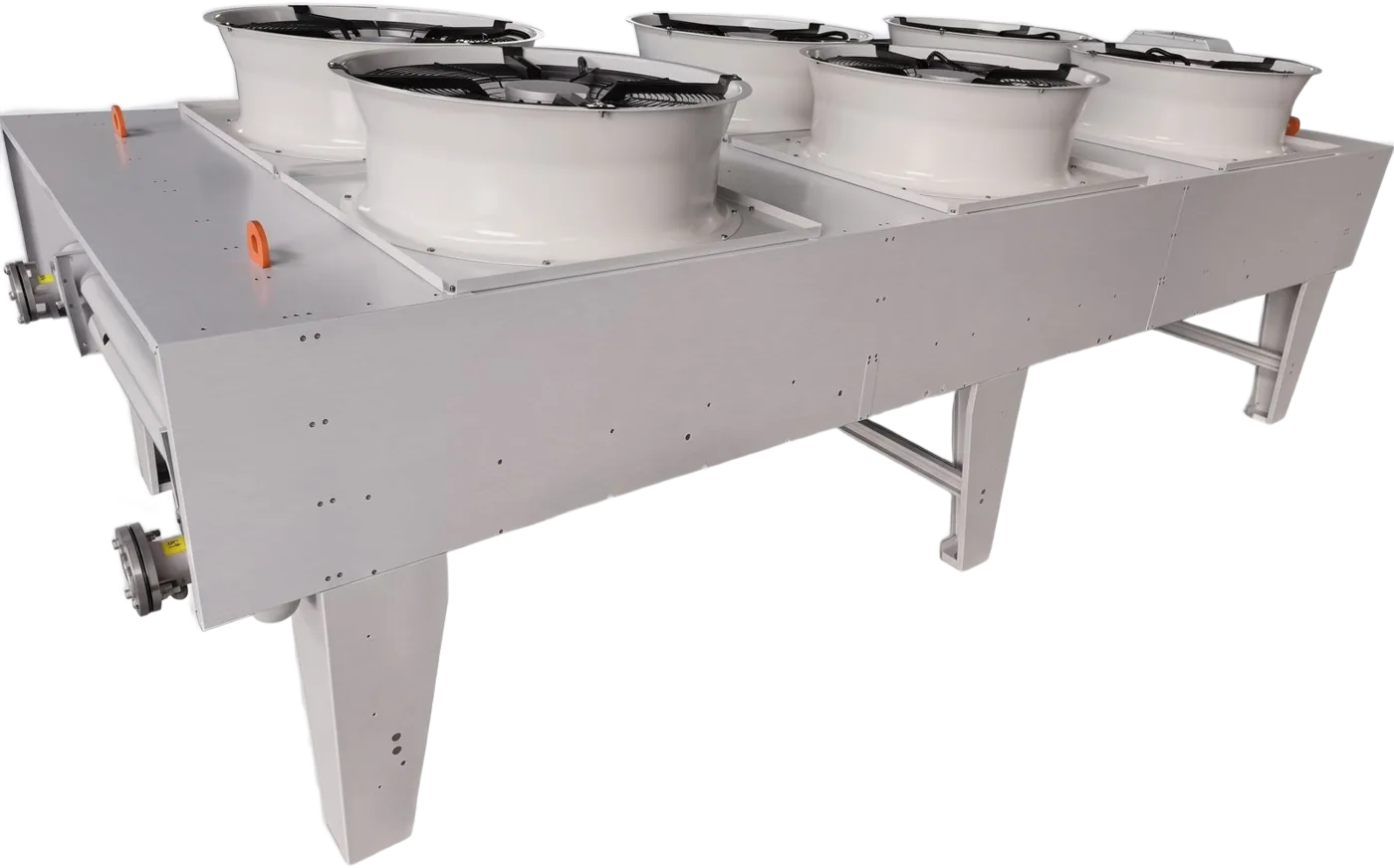 Dry Coolers
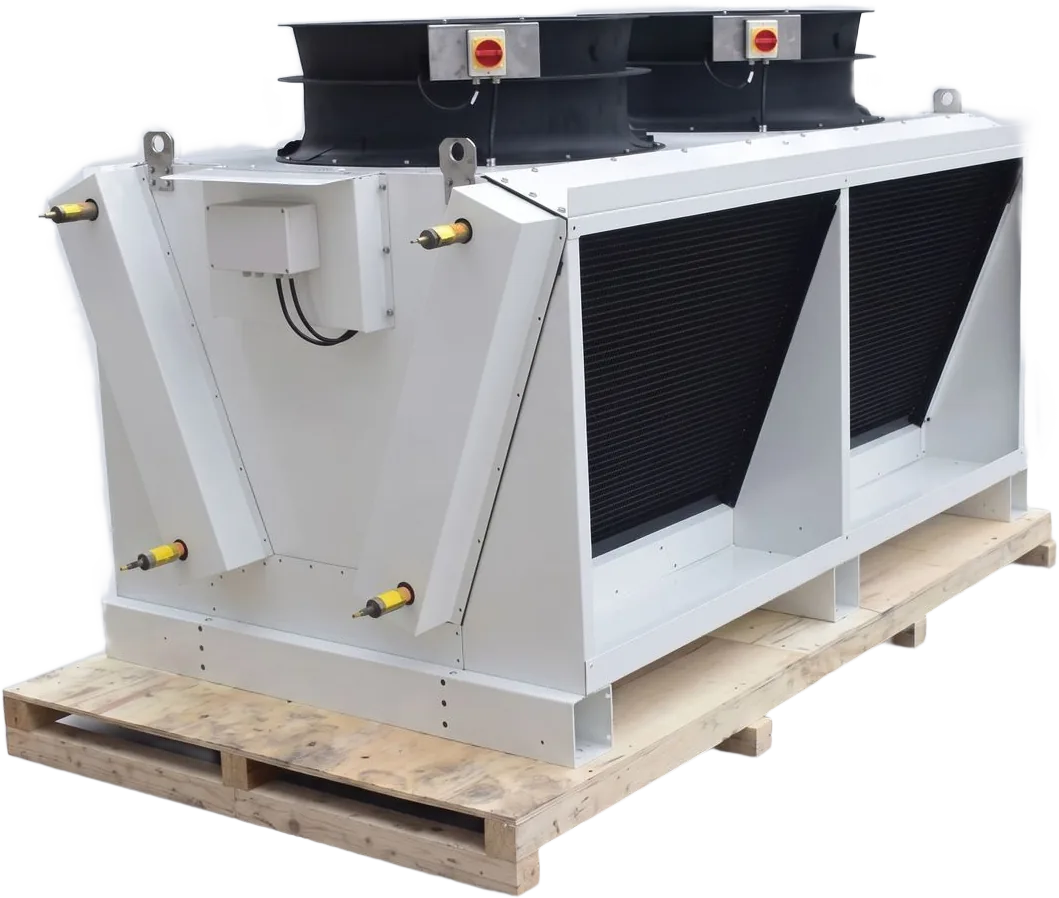 Air-Cooled Heat Exchangers
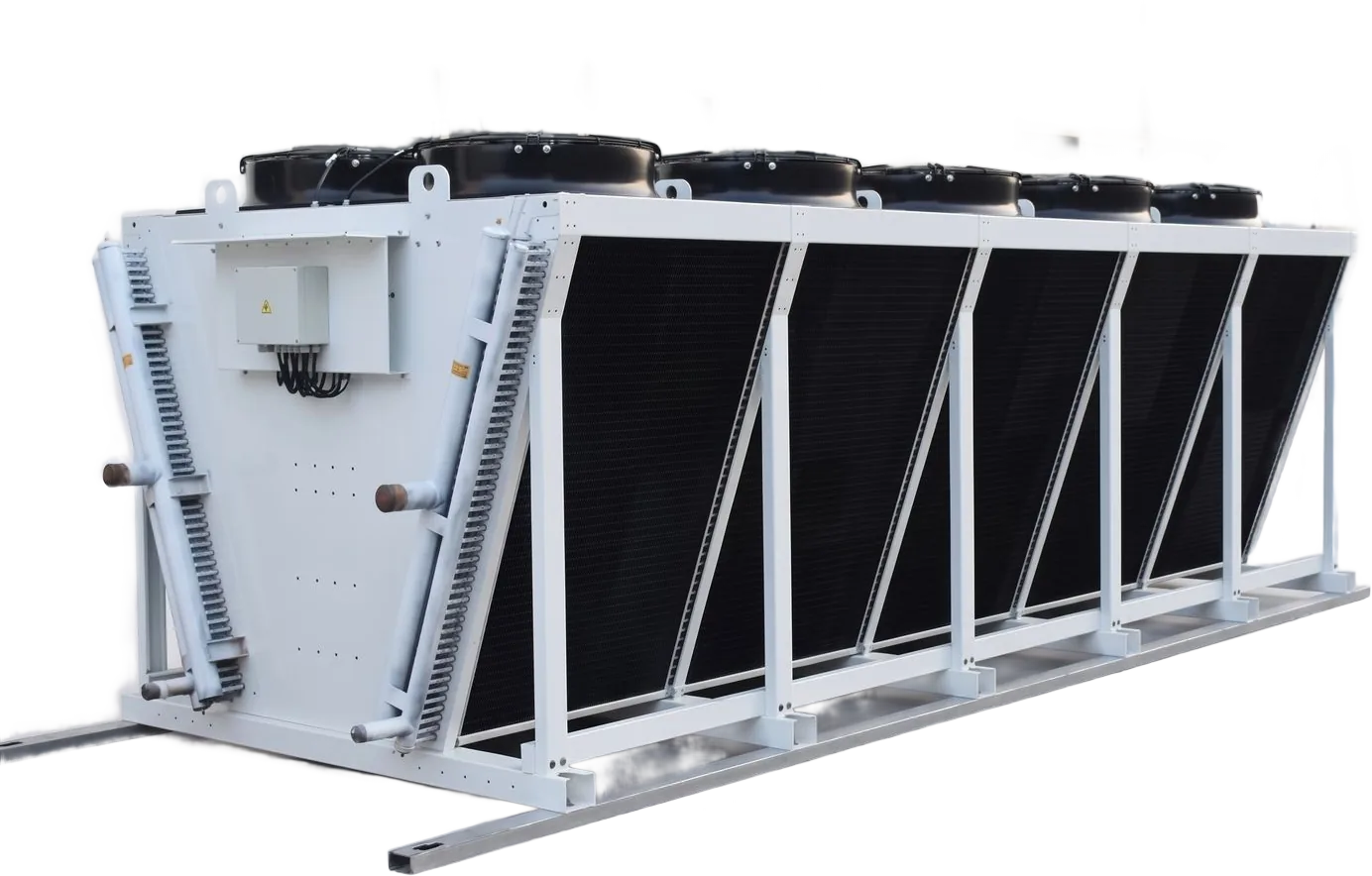 Condensers
Questions about data centers
Do data centers need cooling towers for liquid cooling?
No. Liquid cooling runs warm, with facility water at 90°F and above in ASHRAE classes W32 to W45. At those temperatures a dry cooler can reject the heat to outdoor air for most hours of the year without evaporating water. Adiabatic dry coolers cover the hottest hours.
What is the difference between a dry cooler and an adiabatic dry cooler?
A dry cooler only uses air, so it can cool water to roughly 10 to 15°F above the outdoor dry-bulb temperature. An adiabatic dry cooler wets pads in front of the coil on hot days. The air cools toward its wet-bulb temperature before it reaches the coil, which adds capacity only during the hours the pads run.
What are the ASHRAE W classes?
ASHRAE TC 9.9 groups liquid-cooled IT by the facility water supply temperature: W17 up to 63°F, W27 up to 81°F, W32 up to 90°F, W40 up to 104°F, W45 up to 113°F, and W+ above 113°F. The higher the class, the more hours dry coolers can carry the load alone.
How is a data center dry cooler sized?
From the heat load in MBH or kW, the fluid and glycol percentage, the supply and return temperatures, the flow rate and the site design ambient, usually the ASHRAE 0.4 percent dry-bulb for the location. Redundancy, sound limits and footprint come next.
Who supplies dry coolers for data centers in North America?
Large manufacturers and specialist suppliers both serve the market. KUHLWERX supplies V-bank, flat bed and adiabatic dry coolers rated at 60 Hz with EC fans, sized to each site's loop temperatures and design ambient, with a quote built from your numbers.
Do dry coolers work in hot climates like Phoenix or Dallas?
Yes, with the right loop temperature and sizing. Warmer facility water widens the margin over ambient. Adiabatic pads add capacity on the peak hours, so a hot-climate site can still avoid an open cooling tower.
Send the heat load.
Loop temperatures, flow and site. A sized selection comes back.